The Hidden Code That Speaks to Search Engines
Imagine walking into a crowded networking event. You have thirty seconds to tell a stranger what you do, where you are, and why they should trust you. Now imagine doing that for every single search query on Google. That is exactly what your website faces every day, and the way you introduce yourself to search engines is through schema markup. This structured data vocabulary acts as a translator, converting your website’s content into a language that Google, Bing, and other search engines understand with absolute clarity. Without it, you are just another voice in the crowd. With it, you become the clear, confident expert that search engines love to recommend.
Table of Contents
- The Hidden Code That Speaks to Search Engines
- What Is Organization Schema? The Corporate Identity Card
- What Is LocalBusiness Schema? The Neighborhood Expert Badge
- The Core Differences: A Side-by-Side Comparison
- Granularity of Information
- Eligibility for Rich Snippets
- Which One Should You Choose? A Decision Framework
- Scenario One: The Single-Location Local Business
- Scenario Two: The Multi-Location Business
- Scenario Three: The Service-Area Business
- How to Implement LocalBusiness Schema for Maximum Impact
- Common Pitfalls to Avoid with Schema Markup
- The Future of Structured Data and AI Search
- Make the Smart Choice for Your Local SEO
For local businesses, the choice between LocalBusiness schema and Organization schema is not just a technical detail. It is a strategic decision that can influence how you appear in search results, whether you earn those coveted rich snippets, and ultimately, whether a nearby customer clicks your link or your competitor’s. In this comprehensive guide, we will break down the differences, explore the specific strengths of each, and help you determine which one deserves a place on your website. By the end, you will have a clear roadmap to implement the right structured data and watch your local visibility climb.
What Is Organization Schema? The Corporate Identity Card
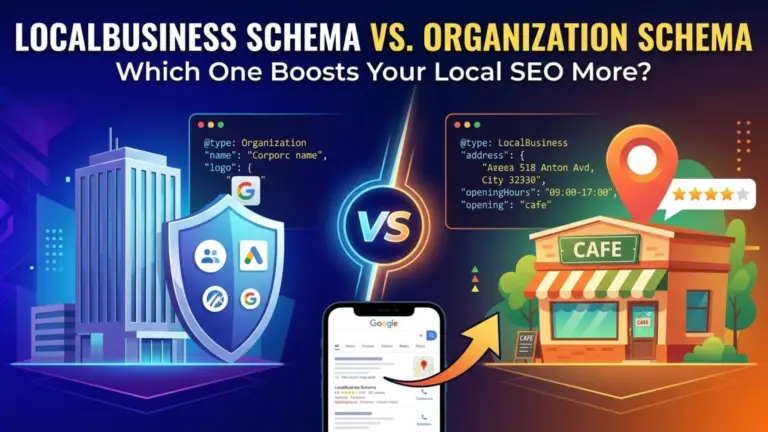
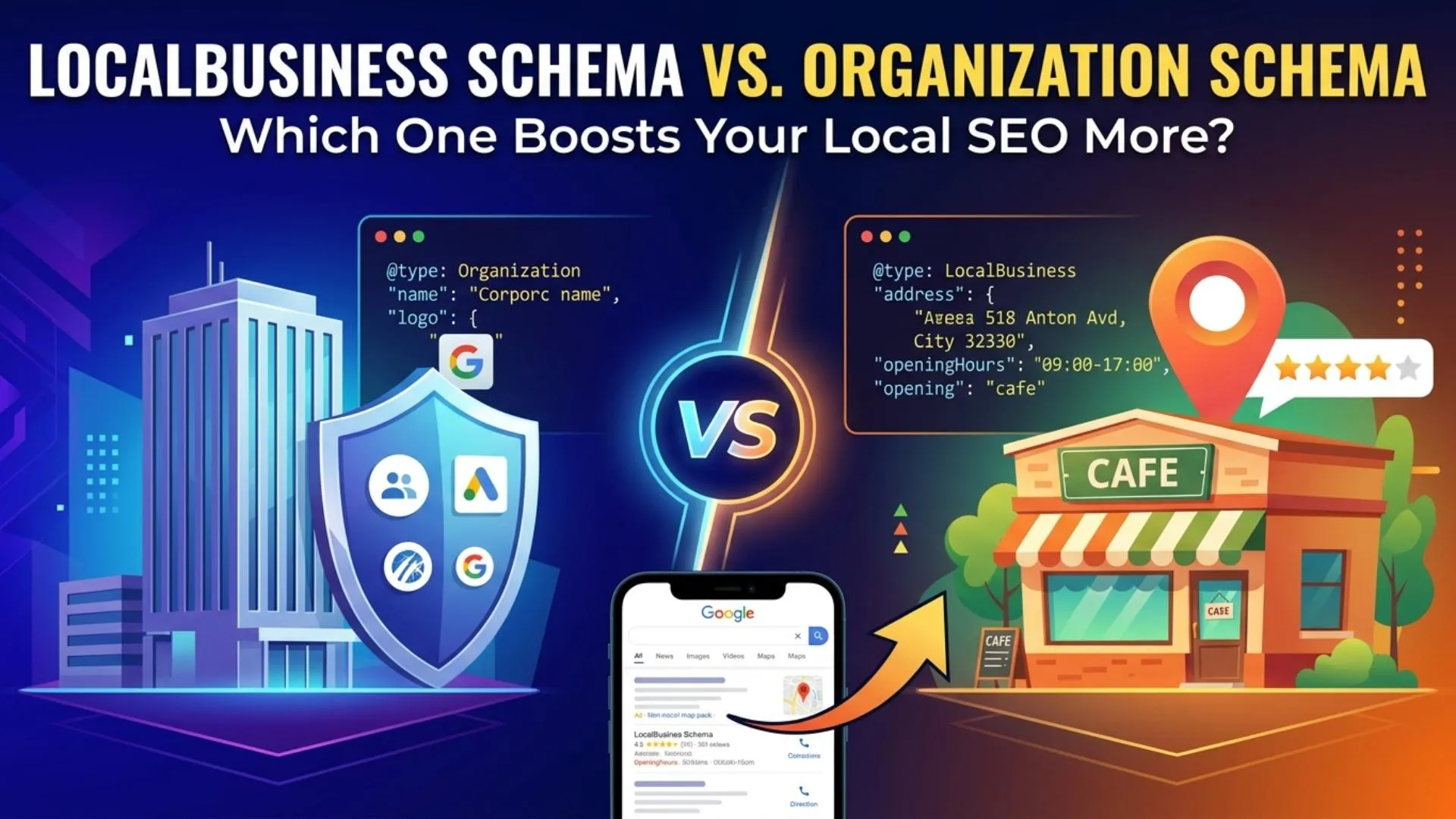
Think of Organization schema as the digital business card for your entire company. It tells search engines who you are at a macro level: your official name, your logo, your contact details, and your social media profiles. This type of schema is perfect for businesses that operate in multiple locations, have a corporate headquarters, or want to establish a strong brand presence online. It is the foundational layer of your structured data strategy, and it works beautifully for building trust and brand recognition.
When you implement Organization schema, you are essentially saying, “Hey Google, this is the entity behind this website.” It helps search engines connect your website to your brand, your official social channels, and even your physical headquarters. For national or international companies, this is invaluable. It creates a consistent identity across the web, making it easier for search engines to attribute content, reviews, and mentions to the correct organization. However, for a single-location local business, this type of schema markup might feel a bit too generic. It does not tell Google about your service area, your opening hours, or the specific types of services you offer in your neighborhood.
What Is LocalBusiness Schema? The Neighborhood Expert Badge
Now, let’s zoom in. LocalBusiness schema is a specialized subtype of Organization schema, and it is designed specifically for businesses with a physical presence that serves a local community. This is where the magic happens for local SEO. This schema goes far beyond the basics of your business name and logo. It dives deep into the details that matter most for local search: your street address, your geo-coordinates, your opening hours, your service radius, and even the specific types of services you offer. It is the digital equivalent of a friendly wave to your neighbors, telling search engines, “We are right here, and we are ready to serve customers in this area.”
The power of LocalBusiness schema lies in its specificity. It allows you to define your business type precisely, whether you are a restaurant, a hotel, a plumber, or a dental clinic. This level of detail helps search engines match your business with highly relevant local queries. For example, if someone searches for “best pizza near me” and your website has LocalBusiness schema with the subtype Restaurant and FoodEstablishment, you have a significant advantage. Google understands exactly what you are and where you are, making it much more likely to show you in the local pack and in map results.
The Core Differences: A Side-by-Side Comparison
To truly understand which schema will boost your local SEO, you need to see how these two types of structured data stack up against each other. They are not competitors; rather, they serve different purposes in your overall SEO strategy. The key is to know when to use one, the other, or even both.
Granularity of Information
The most significant difference is the level of detail. Organization schema provides a high-level overview. It includes properties like name, url, logo, and sameAs (for social profiles). It does not, however, include location-specific data. On the other hand, LocalBusiness schema includes all of those foundational properties plus critical local data points. You can specify your address, geo coordinates, openingHoursSpecification, priceRange, and even areaServed. This granularity is what allows search engines to place you on a map and connect you with local search intent.
For a local coffee shop, knowing that you are open at 7 AM on a Sunday is crucial. Organization schema simply cannot deliver that level of nuance. LocalBusiness schema can, and it does so in a way that is highly structured and easy for search engines to parse. This is the primary reason why local businesses see a much more direct impact on their local search rankings from LocalBusiness schema.
Eligibility for Rich Snippets
When we talk about rich snippets, we are referring to the enhanced visual elements that appear in search results, such as star ratings, images, and business hours. Both Organization and LocalBusiness schema can generate rich snippets, but they are different kinds. Organization schema can help you earn a logo snippet, which displays your brand logo next to your website link. This is great for brand recognition. However, LocalBusiness schema opens the door to a much more powerful set of rich results.
With LocalBusiness schema, you can qualify for the local business carousel, the knowledge panel, and enhanced listings that show your ratings, reviews, and hours of operation directly in the search results. This is the holy grail of local SEO. Instead of a plain blue link, you get a visually rich, interactive listing that commands attention and drives higher click-through rates. If your goal is to dominate local search results, LocalBusiness schema is the clear winner in this category.
Which One Should You Choose? A Decision Framework
There is no one-size-fits-all answer, but there is a clear logical path you can follow. The decision hinges entirely on your business model and your geographic footprint. Let’s walk through the most common scenarios to help you make the right call for your website.
Scenario One: The Single-Location Local Business
If you are a local restaurant, a boutique fitness studio, a law firm, or a plumbing service with one physical location, the answer is unequivocal: you need LocalBusiness schema. This is non-negotiable for your local SEO strategy. It provides search engines with all the context they need to connect you with local customers. While you could technically include Organization schema as a parent entity, your primary focus should be on implementing LocalBusiness schema on your homepage and relevant service pages. This is the single most effective piece of schema markup you can add to your site to boost your local visibility.
Think about the user experience. A potential customer is on their phone, searching for “emergency dentist near me.” They see two results. One is a plain text link. The other has a map pin, a star rating, and a “Open Now” badge. The second result, powered by LocalBusiness schema, is far more enticing. It immediately communicates relevance, trust, and convenience. That is the power of choosing the right schema for your local business.
Scenario Two: The Multi-Location Business
If you own a business with multiple branches, such as a regional bank, a chain of coffee shops, or a real estate agency with several offices, your strategy needs to be more nuanced. In this case, you should use a combination. You should implement Organization schema on your main corporate website to establish your brand entity. Then, you should create a separate page for each location and implement LocalBusiness schema on each of those pages. This way, you get the best of both worlds. You build a strong corporate brand identity while also giving each physical location its own local footprint.
This hybrid approach is essential for avoiding confusion. If you only used Organization schema, you would miss out on local pack rankings for each branch. If you only used LocalBusiness schema on your main site, you would struggle to identify which location is most relevant for which search query. By separating the schemas across different URLs, you help search engines understand the relationship between your brand and your individual storefronts.
Scenario Three: The Service-Area Business
What if you are a mobile business, like a dog groomer, an HVAC technician, or a cleaning service that travels to customers? This is a special case. You may not have a traditional storefront, but you definitely have a service area. In this scenario, LocalBusiness schema is still your best choice, but you will need to use a specific subtype like HomeAndConstructionBusiness or LocalBusiness itself. You will also want to leverage the areaServed property to define the specific cities or zip codes you operate in.
You should also consider using a Service schema in conjunction with your LocalBusiness schema to detail the specific services you offer. This combination is incredibly powerful. It tells Google, “I am a local business, I serve these areas, and I offer these specific services.” This level of clarity can dramatically improve your rankings for long-tail local keywords. Organization schema simply cannot provide this kind of location-based context, making it a poor choice for service-area businesses.
How to Implement LocalBusiness Schema for Maximum Impact
Now that you know which schema you need, let’s talk about implementation. You cannot just copy and paste a generic code snippet and hope for the best. You need to be thorough and accurate. The first step is to generate your JSON-LD code. You can use Google’s Structured Data Markup Helper or a plugin like Rank Math or Yoast SEO for WordPress. These tools simplify the process, but you still need to fill in the correct details.
When creating your LocalBusiness schema, be sure to include the following properties:
- @type: Specify the exact subtype, such as Restaurant, Dentist, or AutoRepair.
- name: Your official business name, exactly as it appears on your Google Business Profile.
- address: The full street address, including the street, city, state, and postal code.
- geo: The latitude and longitude coordinates of your business.
- openingHoursSpecification: Your regular business hours, broken down by day.
- telephone: Your local phone number, not a toll-free number.
- priceRange: A simple indicator like $ or $$ to set user expectations.
- sameAs: Links to your official social media profiles and Google Business Profile.
Accuracy is paramount. If you provide inconsistent information between your schema, your Google Business Profile, and your website content, you will confuse search engines and damage your trust signals. The goal is to create a seamless, consistent web of data that reinforces your location and relevance.
Common Pitfalls to Avoid with Schema Markup
Even with the best intentions, it is easy to make mistakes with structured data. One of the most common errors is using the wrong schema type. For example, using Organization schema on a local business homepage is not inherently wrong, but it is incomplete. It leaves out the local signals that are critical for ranking in the map pack. Another frequent mistake is adding LocalBusiness schema to your site but forgetting to update it when your business hours change or when you move to a new location. Outdated schema is worse than no schema at all because it sends conflicting signals to search engines.
Another pitfall is keyword stuffing within your schema. The name property should be your actual business name, not “Best Plumber in Austin | John’s Plumbing.” This is a spammy tactic that can lead to manual penalties. Similarly, avoid marking up content that is not visible on the page. If you mention a service in your schema but it is not clearly described in your website content, Google may see this as deceptive. Your schema markup should always reflect the honest, visible content on your page. It is a tool for clarification, not for trickery.
The Future of Structured Data and AI Search
As search engines evolve, the importance of schema markup is only going to grow. With the rise of AI-powered search and generative engine optimization (GEO), structured data is becoming the backbone of how machines understand and cite your content. When an AI assistant like Google’s Bard or Bing Chat answers a user’s question, it relies on structured data to find reliable, relevant sources. By implementing the correct schema, you are not just optimizing for today’s search results; you are future-proofing your website for the next generation of search.
For local businesses, this means your LocalBusiness schema will play a critical role in how AI assistants recommend local services. If a user asks, “Find me a highly-rated coffee shop in Seattle that opens early,” the AI will look for entities with clear, structured data. Your LocalBusiness schema, complete with opening hours and reviews, will be a primary source of that information. This is an exciting opportunity to get ahead of the curve and position your business as a trusted authority in the eyes of both traditional search engines and AI-driven platforms.
Make the Smart Choice for Your Local SEO
The battle between LocalBusiness schema and Organization schema is not about which one is universally better. It is about which one is better for your specific situation. For the vast majority of local businesses, LocalBusiness schema is the undisputed champion. It provides the granular, location-specific data that search engines need to boost your local rankings and earn those valuable rich snippets. It is the key to unlocking the local pack and getting your business in front of customers who are ready to buy.
Organization schema has its place, particularly for multi-location brands and corporate entities, but it should never be your only line of defense for local SEO. It is the foundation, while LocalBusiness schema is the detailed blueprint that guides search engines to your front door. So, take a look at your website today. Is your schema markup working as hard as it should be? If not, it is time to make a change.
If you are ready to elevate your local search presence and harness the full power of schema markup, start by auditing your current structured data. If you feel overwhelmed, reach out to a professional who can help you implement a winning strategy. Your future customers are searching for you right now. Make sure you are the one they find.